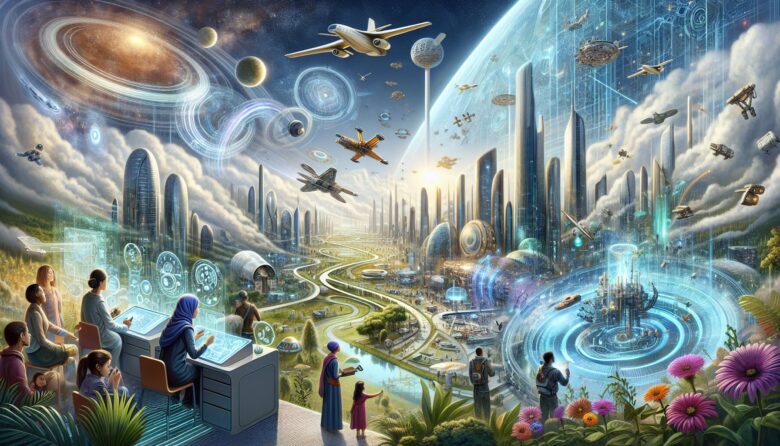
Hey there, space enthusiasts and tech dreamers! Grab your space helmet and get ready for a serious look into the latest cosmic craze — living in space. Yes, you heard me right! We’re talking about actual, honest-to-goodness space habitats. If the phrase “living among the stars” gets your blood pumping with excitement, then welcome to the club. Let’s explore how new technologies are turning this once far-fetched fantasy into something we might actually see.
Why Should We Care About Space Habitats?
Let’s address the giant, floaty elephant in the room — why are space habitats suddenly the talk of the tech world? It’s not all about rekindling our childhood astronaut dreams (though that’s a big part of it). There’s a more pressing story here. Population growth, environmental problems, and that basic human urge to explore are pushing us to look up. With companies like SpaceX, Blue Origin, and NASA leading the charge, we might just become interplanetary beings sooner than we think. Whether that’s good news or terrifying depends on your perspective.
Technologies Making Space Habitats Possible
3D Printed Wonderlands
First up, let’s chat about the real workhorse of space living: 3D printing. Picture this — these machines transforming raw materials into fully functional habitats on the Moon or Mars. It’s not just science fiction anymore. Companies like ICON and Made In Space are already figuring out how to build houses using materials harvested from lunar soil itself. This isn’t just innovative; it’s downright magical, right? Though I have to wonder how long those printers last when they’re constantly blasted with cosmic radiation.
Life-Support Systems 2.0
Then there’s the issue of staying alive in the great vacuum of space, which I’d say is pretty important. Advanced life-support systems, like improved air and water recycling technologies, are essential for long-term human habitation. NASA is redesigning closed-loop systems that ensure we don’t have to ship oxygen in bulk from Earth (imagine those shipping costs).
If space gardening sounds like a challenge, you’re in for a treat. Research into plant biology and hydroponics in space isn’t just growing—it’s exploding with possibilities. Growing fresh produce on Mars or the Moon is more than feasible. It’s already happening in test environments, and honestly, it’s going to be delicious. I just hope space tomatoes taste better than the grocery store ones.
Artificial Intelligence Co-Pilots
Our tech fairy godmother, AI, plays a huge role here too. AI systems handle the complex details of a space colony, from navigation and habitat maintenance to disaster prevention and even mental health monitoring. Imagine having an AI buddy who not only reminds you to water the plants but also plots out emergency escape routes when an asteroid decides to crash your space BBQ. Though knowing my luck, the AI would probably malfunction right when I need it most.
Impacts and Implications: Dream or Dilemma?
Boosting Innovation on Earth
As we inch closer to this new reality, the technologies we develop for space will inevitably trickle back down to Earth. Think about material sciences, sustainable living technologies, and robotics. Each breakthrough isn’t just a step forward for space habitats but a leap for Earth’s industries too. Sometimes the best solutions come from trying to solve impossible problems.
Galactic Implications
Of course, reaching for the stars comes with some serious complications. We’re talking astronomical costs (pun intended) that would make even the wealthiest billionaires think twice. Plus, let’s not forget about the ethical and environmental concerns. What’s our potential impact on untouched celestial bodies? Are we ready to become the new bad neighbors of the galaxy? I’m not sure we’ve proven ourselves to be great stewards of Earth.
People, The Universe Is Yours!
And here’s what gets me excited: this could democratize space. With smaller companies getting into the space business, perhaps the future will allow more people — not just the uber-rich — to explore beyond Earth’s boundaries. Space tourism, anyone? Though I suspect “affordable” space travel will still cost more than my house.
So, Are We Ready to Move Out?
Looking Ahead
Look, I’m as excited as anyone at the prospect of calling the Moon home, but we need to keep our feet (or moon boots) on the ground for now. It’s a thrilling future that requires patience and persistence, to say nothing of dealing with mind-bogglingly complex logistics.
The optimist in me believes that living in space, once a wild concept from sci-fi writers, might actually happen in our lifetime. The pessimist worries about mundane things like space allergies and zero-gravity hair days. For now, all we can do is gaze up in wonder, keep innovating, and perhaps start saving for that one-way ticket to the stars.
Until then, keep dreaming big, stargazers. The sky isn’t the limit anymore. It’s just the starting point.