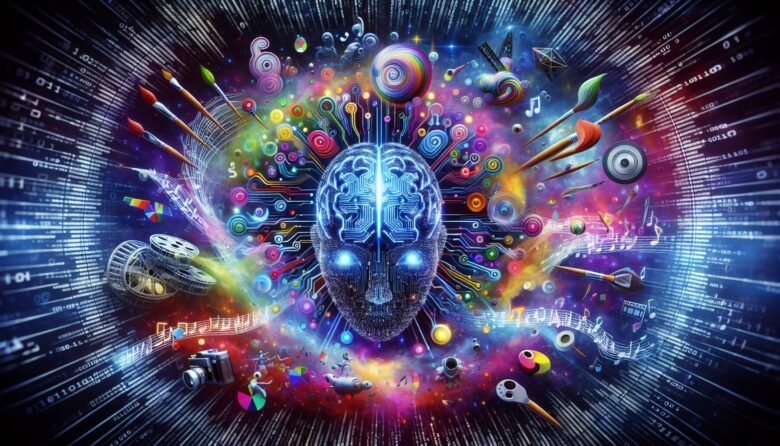
Hey there, tech enthusiasts and dreamers! 🎨🤖 Have you ever imagined a world where art galleries showcase the masterpieces of not just human artists, but also… machines? Grab your cup of coffee—preferably the size of a small pot—and let’s dive into the technicolor world where Artificial Intelligence and creative arts intersect.
The New Renaissance
I like to think of the current era as a kind of New Renaissance. Unlike the historic one that revolved around humans dabbling with paintbrushes and chisels, ours shows machines throwing themselves into the creative fray. A few years back, if someone told me computers could craft symphonies or paint abstract landscapes that fetch thousands at auction, I’d have gently suggested they lay off the sci-fi novels. Yet, here we are.
The game-changer arrived with advances in Artificial Intelligence—specifically, deep learning and neural networks. These algorithms let machines process massive datasets and learn from patterns, much like how toddlers learn not to touch the hot stove (after they do it just once). It’s a wild time to be alive, especially if you’re into creating, consuming, or critiquing art.
AI-generated art blurred our definitions of creativity. When an algorithm can churn out artworks in van Gogh’s style or compose music that hits you right in the feels, it raises some pretty fundamental questions. What is creativity, really? And most importantly, who owns it?
Inspiration or Imitation?
AI’s artistic journey starts by devouring thousands of human-crafted artworks or musical scores. It learns, iterates, and eventually spits out its own version. Think of AI as cliff notes on steroids—it skips the fluff and gets straight to creating mesmerizing stuff. But here’s the million-dollar question: is what AI creates truly original?
Many critics argue that AI art is basically glorified sampling—an echo of human creativity polished with machine precision. But let’s put on our optimistic hats for a moment. What if AI’s ability to mimic styles and trends actually lets human artists push even more boundaries? Take OpenAI’s DALL-E, a neural network that generates images from text descriptions. It gives both established and aspiring artists an endless source of inspiration. A surreal giraffe riding a comet through space? Done and done.
AI in the arts feels like a two-way conversation. Machine-generated art can inspire humans to create outside their comfort zones, while human input can steer machines toward innovation. Whether it’s adapting a style or merging multiple influences, AI is teaching us that imitation and inspiration are two sides of the same paintbrush.
The Cultural Canvas
It’s not just about innovation and inspiration; AI makes creativity accessible to everyone. You don’t need a five-year stint in art school or a state-of-the-art studio to produce compelling art. With tools like DeepArt and RunwayML, not to mention Google’s Magenta project, virtually anyone with a laptop can become a digital Picasso.
And let’s not overlook how AI is transforming accessibility. Artists with disabilities can use AI tools to overcome physical barriers, opening creative avenues previously closed to them. Here, technology acts as both an enabler and an equalizer, adding diverse voices to the global creative chorus.
A Brave New Gallery
You know we’ve entered a new reality when galleries and museums start showcasing AI-generated art. Just look at the AI art auctioned at Christie’s, or exhibitions at MoMA’s forward-thinking spaces. Even fashion designers are embracing AI for textile designs, not to mention architecture firms using algorithms to dream up the structures of tomorrow.
Imagine wandering through a gallery with works from both renowned human and AI artists. Would you be able to tell the difference just by looking? Would it matter? Maybe the real value comes from the experience itself—the emotional and intellectual engagement that art, any art, pulls out of you.
Challenges Up Ahead
Every rose has its thorns—even digital ones. First, there are ethical dilemmas popping up faster than dandelions in spring. Who owns the rights to AI-generated work? Is it the programmer, the machine, or a shared partnership between human and bot? These are the puzzles that companies, including the likes of Google and Adobe, are trying to solve.
Then, there’s the age-old fear of machines taking over jobs—this time, creative ones. Will AI bring opportunities or redundancy to human artists? While AI can replicate styles and techniques with jaw-dropping accuracy, it lacks the unpredictable spark of human intuition, at least for now. In the grand symphony of art, there’s always room for both classical Rossinis and experimental AIs.
Finally, there’s the societal challenge of acceptance. While tech enthusiasts marvel at AI’s creativity, purists might dismiss it as synthetic and soulless. A healthy dialogue about AI’s role in our cultural landscape matters—because what’s art if not a reflection of society’s many faces?
Looking Further Ahead
Alright, let’s take out our crystal ball and wonder, what does the future hold? In one vision, we see human artists enhanced by AI tools, integrating them into their craft like paintbrushes or musical instruments. AI could become a creative partner, offering brainstorming sessions without the risk of absorbing your caffeine addiction.
In another future, we might see hybrid forms of art that we’ve yet to imagine—interactive experiences at the intersection of digital and tactile, where art not only provokes thought but invites you to co-create. By harnessing AI’s capabilities, the art of tomorrow could trigger feelings we never knew existed.
Conclusion: A Creative Symbiosis
We find ourselves at an exhilarating crossroads where creativity is no longer the exclusive domain of humans. It’s a shared space, rich in potential and fraught with challenges. In this artistic partnership between man and machine, we’re learning just as much from our algorithms as they are from us. And honestly, it’s kind of beautiful.
In the words of Alan Turing, “Machines take me by surprise with great frequency.” In this ever-changing dialogue between human creativity and artificial intelligence, there’s plenty of room for surprises. So, here’s to unexpected collaborations, beautiful fusions, and the wild unknown that is the future of art.
Stay curious, stay inspired, and always keep creating—whatever form your creations may take.
Until next time, fellow futurists! 🎨💻