Introduction
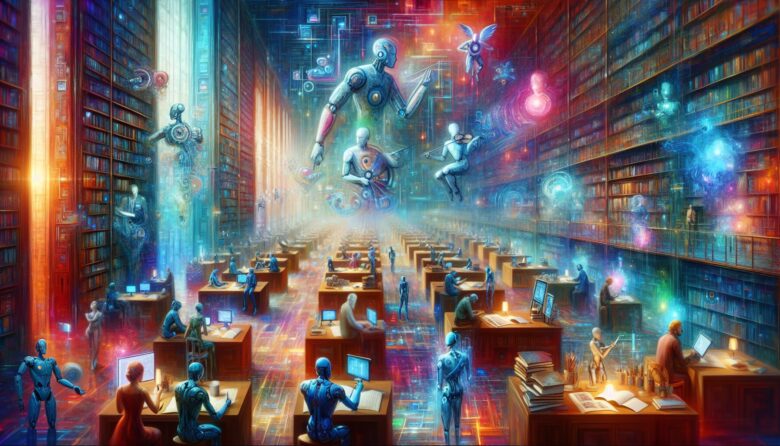
Welcome to my exploration of artificial intelligence and how it’s messing with creativity in ways that honestly blow my mind. If you’ve been paying attention to tech news lately, you know AI is changing industries at breakneck speed. But here’s what really gets me excited: AI isn’t just automating spreadsheets or optimizing delivery routes anymore. It’s making art. Writing poems. Composing symphonies. Grab your coffee because I want to walk you through how machines are getting creative, and trust me, it’s weirder and more wonderful than you might think.
The Changing Face of Creativity
For hundreds of years, we’ve told ourselves that creativity belongs to humans. It’s our special thing, right? The spark that separates us from calculators and toasters. Well, that assumption is getting seriously challenged. Machine learning algorithms can now paint portraits, write haikus, and compose music that’ll give you chills. The tech behind this revolution includes neural networks and something called Generative Adversarial Networks (GANs) and Transformers.
GANs: Artists in Digital Form
Here’s where it gets interesting. GANs work like two artists having an argument. One network (the generator) creates something new. The other (the discriminator) tries to spot whether it’s fake. They keep pushing each other until the generator gets so good that even the discriminator can’t tell what’s real anymore. The result? Digital art that’s selling for ridiculous amounts of money at fancy auctions.
I’ve seen AI paintings that look like fever dreams and others that could hang in the Louvre without anyone batting an eye. What fascinates me is that these aren’t just fancy Photoshop filters. GANs are actually collaborating with human artists, pushing them to try things they never would have attempted before. It’s collaboration, not replacement.
The Role of Transformers in Content Creation
While GANs are busy creating visual art, Transformers are revolutionizing writing. Models like GPT-3 can hold conversations, write articles, and spin stories that feel surprisingly human. I’ll admit, it’s a little unsettling how good they’ve gotten.
Writers and marketers are using these tools to break through creative blocks and automate the boring stuff. Imagine never staring at a blank page again because an AI can throw you five different opening paragraphs to work with. But this raises some uncomfortable questions. When a machine helps write something, who really authored it? And what happens to human creativity when algorithms can mimic it so well?
Blurring Boundaries: AI as Collaborator, Not Competitor
Look, I get why people worry about AI stealing creative jobs. The fear is real. But most experts I’ve talked to see AI more as a creative partner than a threat. Picture this: an artist uses AI to generate dozens of concept sketches, then picks the most promising ones to develop by hand. Or a novelist bounces plot ideas off GPT-3 to see what unexpected directions emerge. The human is still driving, but now they have a really weird, really powerful co-pilot.
Aiding the Novice and Optimizing the Expert
Here’s something cool: AI is making creativity more accessible. Someone who’s never touched a paintbrush can now experiment with digital art tools and discover they have an eye for color. Meanwhile, professional artists can offload tedious tasks to focus on the big-picture stuff that actually requires human intuition.
AI also lets creators analyze massive amounts of data to spot trends or mix influences from completely different art movements. You’re not just automating creativity, you’re expanding what’s possible. That said, it’s not all sunshine and algorithmic rainbows.
The Ethical Minefield of AI Creativity
We need to talk about the messy stuff. When an AI creates something, who owns it? The person who clicked “generate”? The company that built the model? The thousands of artists whose work trained the algorithm? Copyright law hasn’t caught up to this reality, and it’s causing real headaches.
Then there’s the bias problem. AI learns from human-created data, which means it inherits our prejudices and blind spots. I’ve seen AI art tools that struggle with diverse faces or writing assistants that default to outdated stereotypes. These aren’t just technical glitches, they’re reflections of the biased datasets we feed these systems.
Fixing this requires everyone, from policymakers to programmers to artists, working together. We need transparency about how these systems work, fairness in how they’re trained, and inclusion in who gets to shape them.
Conclusion: The Future of AI in Creativity
AI’s impact on creativity is moving fast, and honestly, I’m not sure anyone knows exactly where we’re headed. The ethical challenges are real, but so is the potential. We might be witnessing the start of a new kind of creative renaissance, one where humans and machines work together in ways we’re just beginning to understand.
I don’t think AI will replace human artists, writers, or musicians. But it’s definitely changing what it means to be creative. Maybe that’s not such a bad thing. Art has always evolved with technology, from oil paints to photography to digital tools. AI is just the latest chapter in that story.
Thanks for sticking with me through this deep dive. I’m still figuring out what AI creativity means for all of us, but I’m convinced it’s worth paying attention to. Because whether we like it or not, the machines are getting creative, and that changes everything.