
The Setup: Why I Fell for the Headlines
It started like every other wellness trend I’ve half-committed to. Late 2025, everyone was talking about the PREDIMED-Plus trial results in The Lancet, which showed a 24% reduction in major cardiovascular events for people following an energy-reduced Mediterranean diet with physical activity. The numbers were real. The study was massive. And suddenly, my Instagram feed was full of people buying expensive olive oil like it was Bitcoin in 2017.
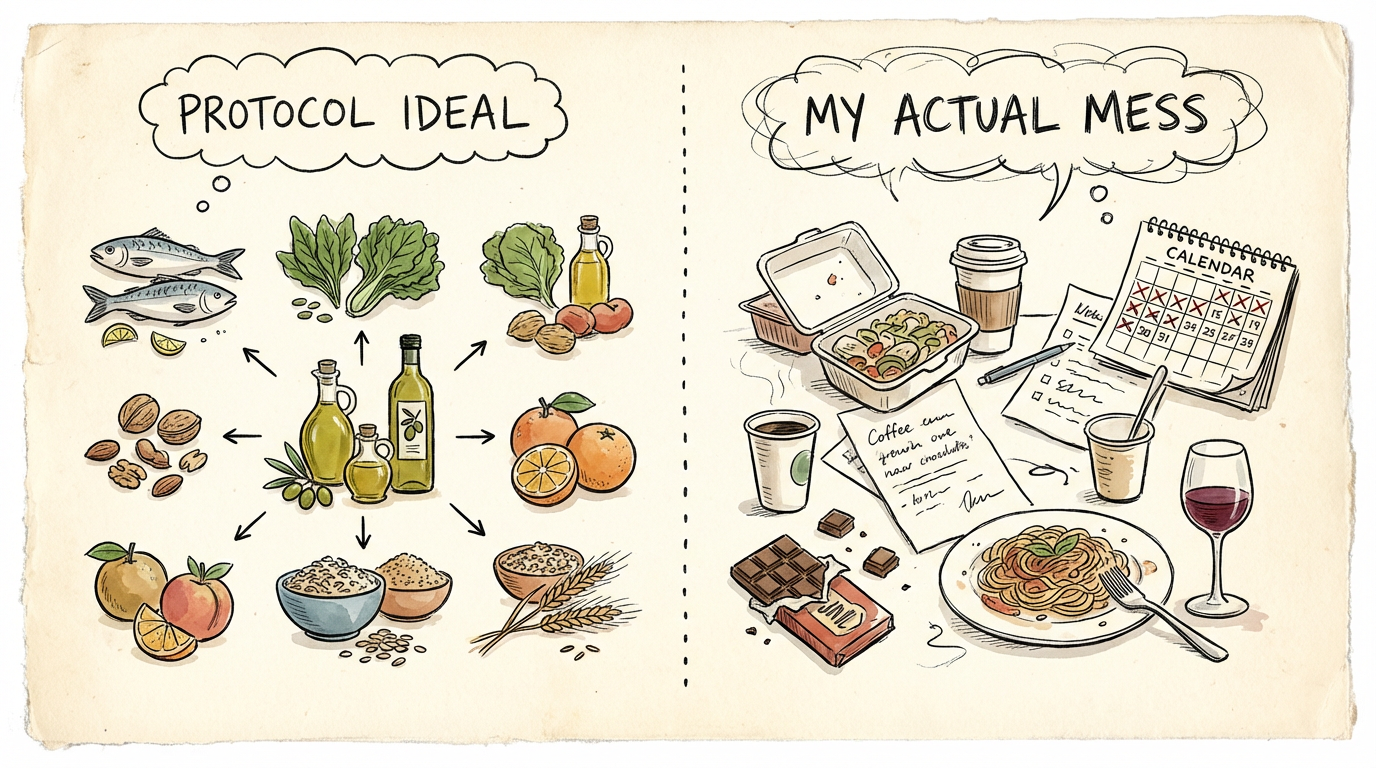
I told myself this would be different. I wasn’t chasing a quick fix or trying to look good in photos. I genuinely believed that if I could eat like the people in Sardinia and Nicoya, Costa Rica, where traditional Mediterranean and plant-heavy eating patterns are still stubbornly alive, where over 70% of daily calories still come from whole plant foods, then maybe I could actually stick with something. The research checked out. The logic was sound. What could go wrong?
Everything, as it turned out. But also, oddly, nothing.
Week One and Two: The Optimism Phase
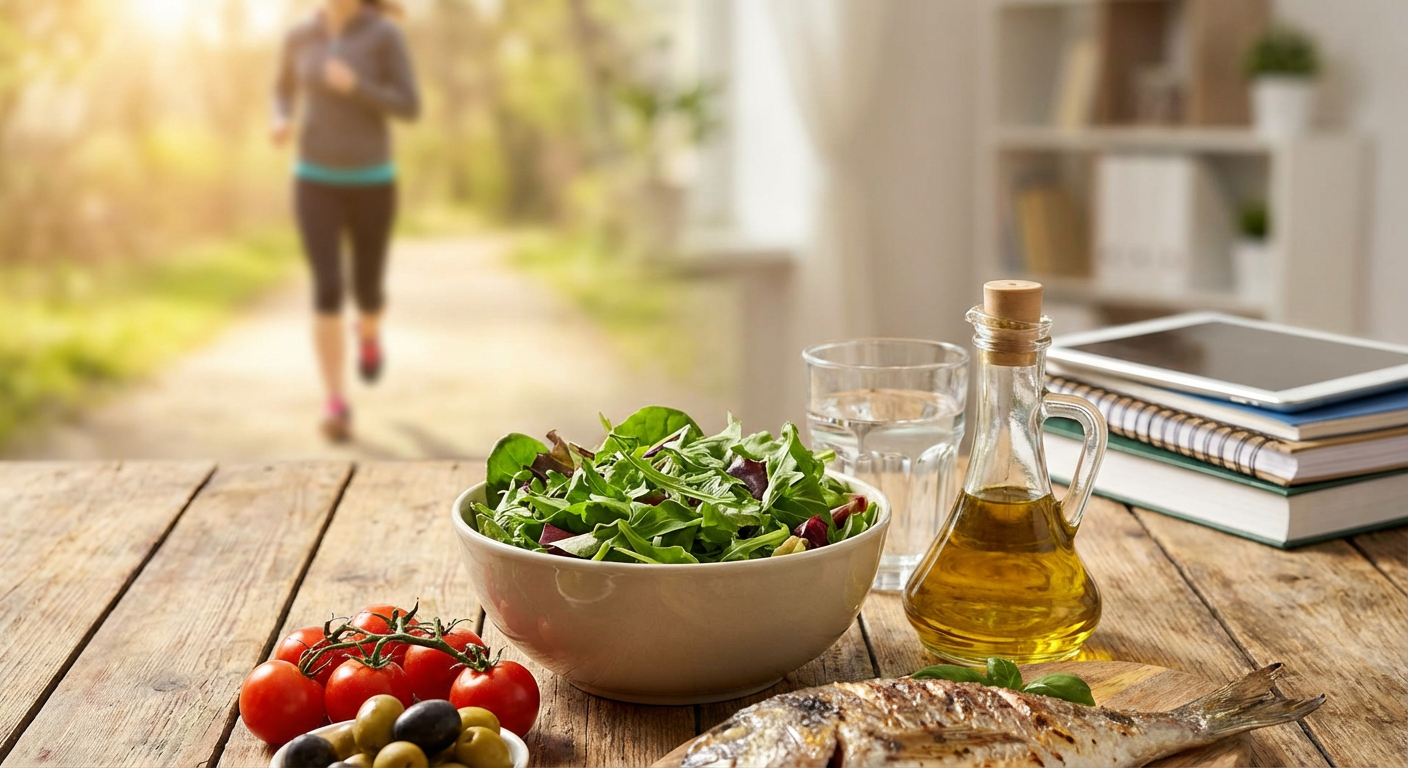
I started the way everyone starts. I made a list. I bought beautiful things from the farmer’s market. I convinced myself that the expensive extra virgin olive oil, the kind that costs more than my coffee habit, would taste like liquid health, which it sort of did. I followed the protocol closely those first two weeks: white fish three times, a shocking amount of vegetables, whole grains I’d never heard of, legumes in portions that felt almost punitive.
The Mediterranean Longevity Protocol is supposed to work like this: energy-reduced, heavy on plants, olive oil as your primary fat, fish over red meat, whole grains, legumes, nuts, minimal processed food. Basically, if your grandmother didn’t grow it or your great-grandmother wouldn’t recognize it, you don’t eat it. Simple enough, right? Except that the average American gets only 12% of daily calories from vegetables and legumes combined. The Mediterranean ideal sits around 40%. That’s a gap you can’t close with enthusiasm and a good farmers market.
Week one, I felt virtuous. I made a lentil soup that actually tasted like something. Week two, I started noticing that none of my friends wanted to go to restaurants with me anymore. Not because I was annoying about it, but because I became the person who called ahead and asked questions. I was becoming the person I never wanted to be.
Week Three Through Six: Where Reality Lives
By week three, I was supposed to have incorporated physical activity alongside the dietary changes. The protocol isn’t just about food, it’s about movement. But I also have a job, a life, a tendency to sit at my desk until my back makes noise. I added walks. Inconsistent walks. The kind where you go hard for three days and then disappear for a week.
The food started to slip. A birthday dinner happened. I had pasta. Not the whole wheat, carefully portioned pasta I’d planned to have eventually. I had actual indulgent pasta with cream sauce and I didn’t feel guilty about it until the next morning when I caught myself thinking about it. The internet had gotten into my head. The research was right, Mediterranean diet adherence is associated with a 33% lower risk of depression compared to Western eating patterns, according to a 2025 meta-analysis of 32 studies in Nutrients, but what the research didn’t mention was that rigidity about food creates its own kind of psychological weight.
I recalibrated. I realized that being 40% plant-based was better than being 12% and then quitting entirely. I wasn’t trying to live in Sardinia. I was trying to live in America, in the 2020s, in a body that exists in the actual world.
The protocol says you should get most of your daily calories from whole plant foods, olive oil, and fish. What I actually did was get most of my calories from that, most of the time, with a margin for error built in. Some weeks were better than others. Some weeks I bought olive oil and didn’t use it fast enough, which feels like a waste of both money and good intentions. But I kept the structure. I didn’t throw the whole thing away.
The Unexpected Part: What Actually Happened
Here’s where I get honest with you in that way that doesn’t play well on the internet. I didn’t have some dramatic transformation. I didn’t wake up one morning feeling like I’d discovered the secret to eternal youth. What I noticed was incremental and quiet and so small that I almost missed it.
I had more energy. Not like I’d been injected with optimism, but in a practical sense. I could do things without hitting a wall at 3 p.m. My clothes fit differently. My skin looked better. But more than that, there was something I didn’t expect: I was genuinely less anxious. Not because I was following the rules perfectly, but because I wasn’t fighting myself anymore. I was eating in a way that made sense, most of the time.
The olive oil consumption spike that hit the U.S. in early 2026, imports rose 28% in Q1 according to the North American Olive Oil Association, made sense to me for the first time. Not because it’s a cure-all, but because when you’re actually using it daily to cook vegetables and dress salads, it becomes part of your life instead of a wellness trend. It tastes good. It does something. You don’t have to believe it’s magic for it to be useful.
The Blue Zones 2025 research and dietary findings showed that the people living longest in the world aren’t doing anything revolutionary. They’re not optimizing. They’re just living in places where the default is to eat plants and move around and have community. When I realized that, something shifted. I stopped thinking about the protocol as something to nail perfectly and started thinking about it as a direction.
What I Actually Learned From Mostly Failing
The honest opinion is this: if you’re thinking about trying the Mediterranean Longevity Protocol, don’t start by trying to become a different person overnight. Start by noticing what you’re already eating and ask yourself if you’re willing to shift it gradually. The research is real. The outcomes are real. But adherence is personal, and perfectionism is the enemy.
I ate fish twice a week instead of three times some weeks. I made lentil soup and also ate a sandwich on white bread. I went for walks and also didn’t. I failed the protocol in about a thousand small ways, and I kept going anyway because the direction felt right, even if my execution was messy.
What would help you is knowing that the gap between 12% of your calories from plants and 40% is huge, but you don’t have to close it in a week. You also don’t have to close it perfectly. You can get most of the benefits by getting most of the way there, most of the time. The research backs this up too. The reduction in cardiovascular events, the mental health benefits, all of it still applies when you’re not performing the protocol like it’s a religious ritual.
I’m curious what you’d find if you tried this. Not the perfect version. The real version. The one where you eat well most of the time and also live your life. Tell me what actually happened when you tried it. I want to know what you noticed that the research missed.