
The Study That Made Me Question My Marriage (In the Best Way)
I first heard about the “sleep divorce” thing on my phone at 2 AM, which is honestly the perfect time to make life-changing decisions. My husband was snoring, I was staring at the ceiling doing that thing where you calculate how many hours of sleep you could theoretically still get if you fell asleep in the next 47 seconds, and my feed was full of people talking about the American Academy of Sleep Medicine 2025 survey findings showing that 75% of couples who sleep separately report better rest.
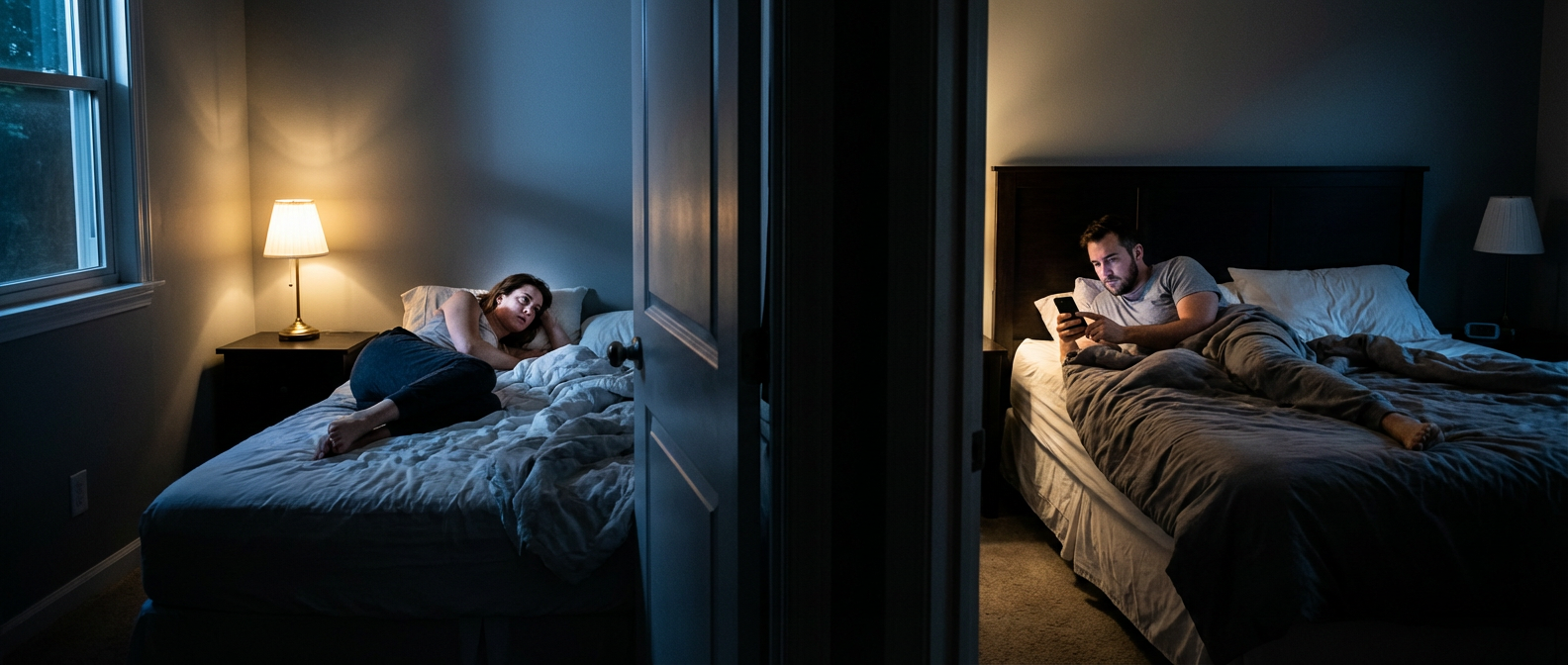
Here’s what got me: the numbers. Turns out that what was once considered a sign of a broken relationship is now happening in about one-third of American households, which is a pretty dramatic shift from just a couple years ago when it was one in four. This wasn’t fringe anymore. This was mainstream. And there was actual data suggesting it worked.
I kept scrolling. Casper reported a 40% jump in single mattress sales to couples’ homes in 2025. TikTok had apparently exploded with the hashtag #SleepDivorce hitting over 2 billion views. The National Sleep Foundation Sleep in America 2025 Poll found that more than two-thirds of adults say their partner’s sleep habits tank their own sleep quality at least a few nights weekly. And the Sleep Health journal published actual research showing a 23% improvement in sleep scores when couples slept apart.
I put the phone down and looked at my husband. Still snoring. And I thought: what if this isn’t a failure of our relationship but actually just… logistics?
Day 1-7: The Guilt Phase and Why I’m Apparently a Monster
I brought it up the next morning over coffee, and I need to be honest about how much I felt like I was proposing a divorce. The silence after I finished explaining was the kind of silence that makes you regret every word choice. Then my husband said, “Like, separate beds?” and I could literally feel myself bracing for rejection.
He surprised me. He was tired too. Not of me. Just tired. He asked if we’d still, you know, actually be together when we needed to be. Yes. Obviously. We just wouldn’t be doing it while also trying to sleep through snoring and my habit of stealing all the blankets and his tendency to run the AC at arctic temperatures.
But the first week was weird in ways I didn’t anticipate. I felt guilty leaving the bedroom. I felt guilty climbing into the guest bed with fresh sheets. I kept wondering what our parents would think and whether to tell anyone, which is absolutely ridiculous but also completely honest. There’s still something in the cultural narrative that makes separate sleeping feel like admitting defeat.
The sleep was good though. Like, aggressively good. I stayed asleep instead of surfacing every time he shifted position. I could cocoon with blankets. I could sleep cool on my side of the bed without negotiating with another human about basic temperature.
Day 8-20: When You Start Noticing Things
Somewhere around day ten, something unexpected happened. I stopped being defensive about it and started being curious. I slept better. My husband slept better. We were less irritable with each other because we weren’t both running a sleep deficit. The things I used to resent, his snoring, his schedule, his preferred sleeping temperature, became just facts about him rather than personal attacks on my wellbeing.
I actually wanted to spend time with him because I wasn’t exhausted and frustrated. We sat together in the mornings. We had sex, which was better because I wasn’t mentally calculating how it would affect my sleep schedule. We talked more. It sounds counterintuitive, but removing the bed as our primary bonding space made our actual bonding time feel more intentional.
I told a friend about the arrangement and got that look. You know the one. The concerned-but-trying-not-to-be-judgmental look. I found myself defending something I’d internalized as a failure just weeks earlier. “We’re sleeping better,” I kept saying, as if I needed permission for both of us to feel rested.
The research started making sense in a visceral way. That 23% improvement in sleep quality scores wasn’t just a number. It was me waking up without that groggy resentment. It was my husband not getting defensive when I’d mentioned his snoring. It was both of us arriving at couple time as better versions of ourselves instead of exhausted, irritable versions.
Day 21-30: The Part Where I Had to Change My Mind
By the final week, I’d had to genuinely update my beliefs about what a good relationship looks like. I went in thinking this was something we were trying as a temporary experiment, maybe evidence of cracks that needed fixing. I’m leaving it understanding that good relationships are sometimes about meeting each other’s actual needs instead of performing an idea of what relationships should look like.
The most uncomfortable part wasn’t the separate sleeping. It was admitting I’d been wrong about what it meant. I’ve spent so much mental energy on cultural narratives about what intimacy requires that I hadn’t stopped to ask what actually served us both. A couple sleeping in separate beds isn’t a relationship trending toward dissolution. Sometimes it’s just good problem-solving.
We’re staying with it. Not because we’re trying to join some trend or because something is broken. We’re staying with it because we’re sleeping better, which means we’re showing up better for each other everywhere else. We’ve made the guest bed situation more permanent and actually comfortable, which means we got intentional about it.
I’m aware this might not be everyone’s answer. Maybe you have a tiny apartment or a partner who loves co-sleeping or different sleep needs that aren’t being disrupted. But if you’ve been lying awake next to someone, resenting them for being human, then maybe it’s worth asking whether you’re solving the wrong problem. Maybe the issue isn’t the relationship. Maybe it’s just that sleeping like interlocked puzzle pieces doesn’t work for your actual bodies.
What I Wish I’d Known Before I Started
Change your mind when the evidence suggests you should. That’s harder than it sounds because admitting you were wrong about something means sitting with discomfort for a while. But on the other side of that discomfort is sometimes just… better sleep. Better mornings. A relationship that feels less like a performance and more like something that actually works for both people in it.
If you’re considering this and feeling that same guilt I felt, I get it. But I also want to offer you something: what if good relationships are sometimes about being honest enough to say that the status quo isn’t serving you, and brave enough to actually change it? What’s your experience been with shared sleep, or are you considering trying something different? I’d genuinely love to hear what made you curious about this in the first place.