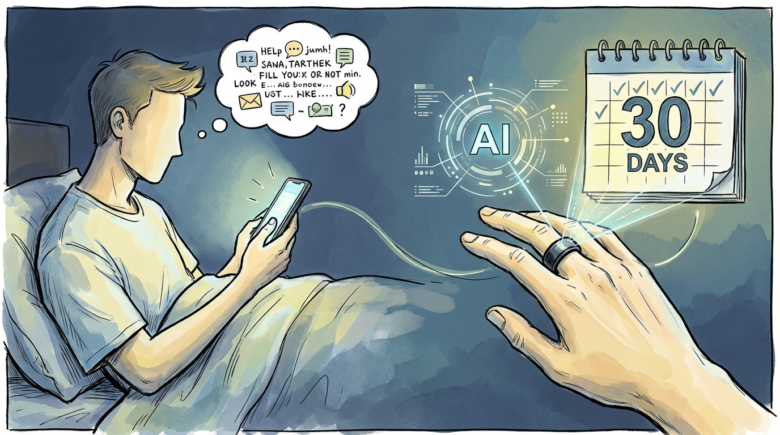
The Deal I Made With Myself
Here’s the thing about morning phone scrolling: you don’t really decide to do it. Your eyes open, your hand moves, and suddenly you’re watching someone’s cat video at 6:47 AM while your coffee gets cold. According to a Pew Research Center 2025 digital habits report, the average American checks their phone within eight minutes of waking. I was doing it in five.

So when Oura Ring 4 landed on my wrist in late 2024, complete with its new AI-powered Advisor feature, I thought: why not actually test whether a piece of wearable tech could replace that first dopamine hit with something theoretically more useful? The Oura Ring 4 Advisor feature overview promised to synthesize my sleep quality, heart rate variability, and activity trends into personalized coaching each morning. It sounded almost too clean. Which meant I had to try it.
For thirty days, I committed to one rule: before touching my phone, I’d check the Advisor. No exceptions. No “just one email.” I’d wake up, shower, make coffee, and then sit with whatever the ring had to tell me about my body’s readiness for the day.
What Actually Happened (The Honest Part)
Week one was novelty. The ring would tell me things like “your sleep was efficient but your HRV is lower than usual, so consider moving your workout to evening” or “you’ve recovered well today — this is a good day for intensity.” It felt like having a coach who’d been watching my biometric movie all night and was now giving me feedback nobody else would bother with.
The science backs this up more than I expected. A Stanford Sleep Medicine study from 2025 found that people who actively reviewed their HRV trends daily for thirty days reported a 23% improvement in how ready they felt in the morning. Not massive, but not nothing either. Oura’s own data shows the Advisor feature hit a 41% daily engagement rate in early 2025, making it the most-used feature in the app’s entire history. People were actually using this thing.
But here’s where I get uncomfortable: I’m not sure if the improvement came from the coaching itself, or because I was finally being intentional about something in my morning instead of letting my phone’s algorithm decide what my brain should consume first.
The real shift happened around week two. I stopped reaching for my phone automatically. Not because the Advisor was fascinating — it wasn’t always. Some mornings it just said “you’re fine, have a normal day.” But that blankness was somehow less addictive than the infinite scroll. The data took maybe three minutes. Then I had to actually decide whether to pick up my phone, which broke the automaticity. Most mornings, I didn’t.
The Price Question Nobody Wants to Discuss
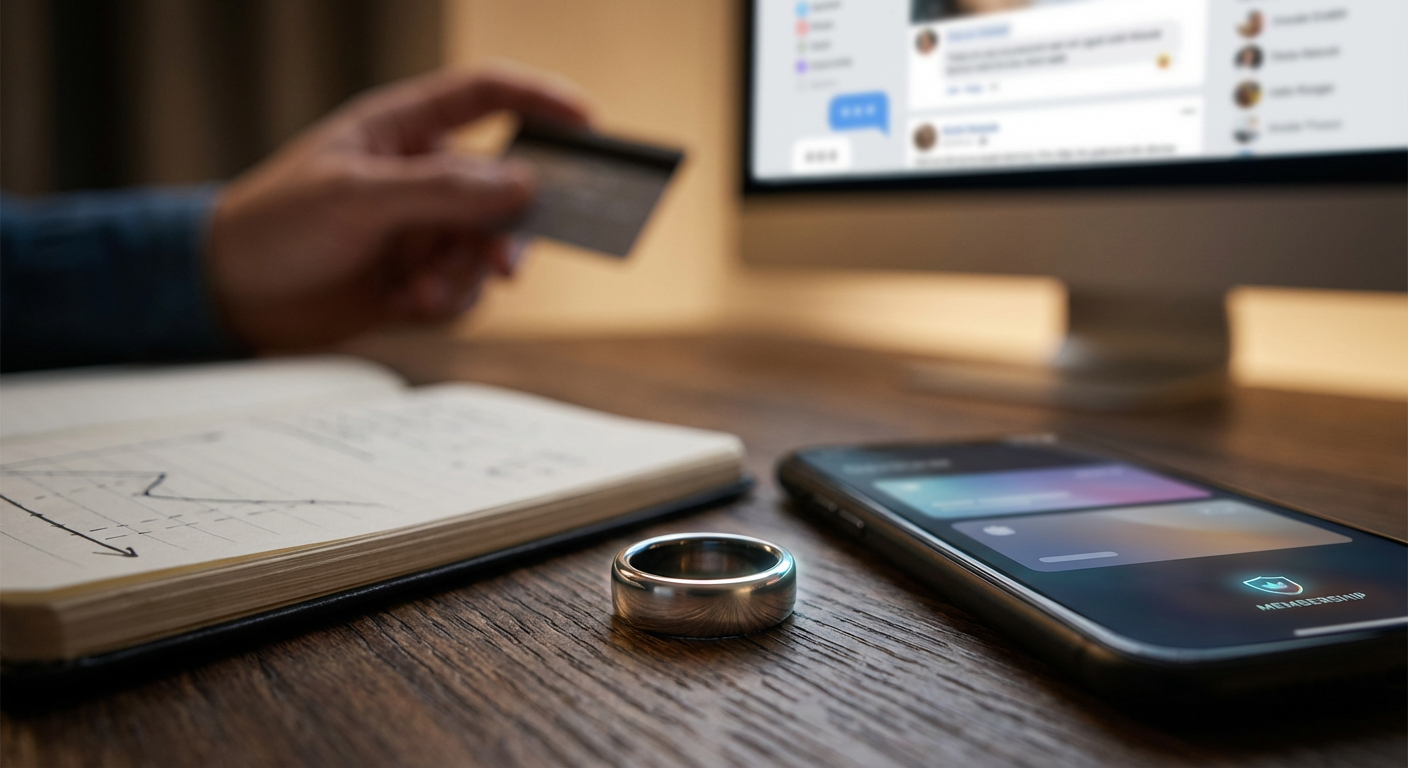
The Oura Ring 4 costs $349. The Advisor feature requires a $5.99 monthly membership to access. That’s not cheap, and Reddit’s r/ouraring community has been vocal about it. Four hundred and fifty thousand people, and a lot of them are asking why premium features keep moving behind paywalls.
I get it. You’re spending money to replace the free dopamine of social media with the free dopamine of biometric data. Except it’s not free, and there’s something darkly funny about that calculus. You pay to check a health score instead of checking Instagram. Both are habits. One just costs more.
But for me, that friction was the point. I needed the friction. The paywall meant I’d actually thought about whether I wanted this, which made me less likely to treat it like disposable entertainment.
What Actually Changed (Beyond the Data)
By week three, I noticed something stupid but real: I was drinking more water. Not because the Advisor told me to, but because I kept seeing hydration mentioned as a factor in recovery. I started connecting the dots between how I felt and what the data said, instead of scrolling past information without absorbing it.
I moved my workouts around based on the ring’s readiness scores. Some of my best training days came on mornings when the Advisor flagged an optimal window for high intensity. Some of my worst came when I ignored it. That correlation felt worth paying attention to.
The morning mood shifted, too. There’s a strange psychology to starting your day with data that’s specific to you and you alone, instead of curated content designed to keep you engaged. The Advisor didn’t tell me what to think. It just showed me what my body had done overnight and asked me to plan accordingly. That framing felt genuinely different.
But I need to be honest about what didn’t happen: I didn’t suddenly become transformed. I still checked my phone eventually. I still wasted time. I still had mornings where I felt terrible despite the ring saying I was “recovered and ready.” The Advisor didn’t fix my anxiety or my productivity problems. It just gave me a different entry point into my day.
The Thing I Actually Believe Now
Here’s my unpopular opinion: the Oura Ring 4’s value isn’t in the hardware or even the AI coaching itself. It’s in the act of choosing to pay attention to something that’s measuring you in real time, rather than something that’s measuring you to sell you things. One habit costs money and gives you data. The other costs nothing and costs you everything.
That said, you don’t need an Oura Ring to do this. You could use any fitness tracker. You could write down how you slept and how you felt. You could do literally nothing and just decide not to check your phone for the first ten minutes of the day. The ring just happened to be what made it stick for me, probably because I’d already invested in it.
After thirty days, I’m keeping the Advisor in my routine. Not because it’s revolutionary. But because it gave me back about ten minutes every morning that used to belong to my phone, and those ten minutes have somehow become the most intentional part of my day. That’s worth the $5.99 to me, though I understand completely why other people would argue it shouldn’t be.
What did your mornings look like before and after you changed them? I’m curious whether this resonates or if you think I’m just finding an expensive way to avoid the real issue. Either way, let’s talk about it.